Program report QB-8724 · filed November 10, 2026
AI in SalesMeasured report
Muse Ember targets agent work at 10 cents per million input tokens
Meta’s Muse Ember costs 10 cents per million input tokens and targets repeated agent work, but its claimed benchmark lead lacks scores, methodology, output pricing, and deployment results.
By Nathan Brooks3 min read656 words
Program notes
- Muse Ember launched on Monday at 10 cents per million input tokens.
- Meta says Ember handles tool calls, coding subtasks, routing, extraction, and long-document parsing.
- Meta says Ember can process text, images, and audio, including screenshots, voice memos, meeting recordings, and video.
- Ember is the fourth Muse model, following Spark, Glimmer, and Wonder.
- Spark launched in April, Glimmer in August, Muse Agent in September, and Wonder in October.
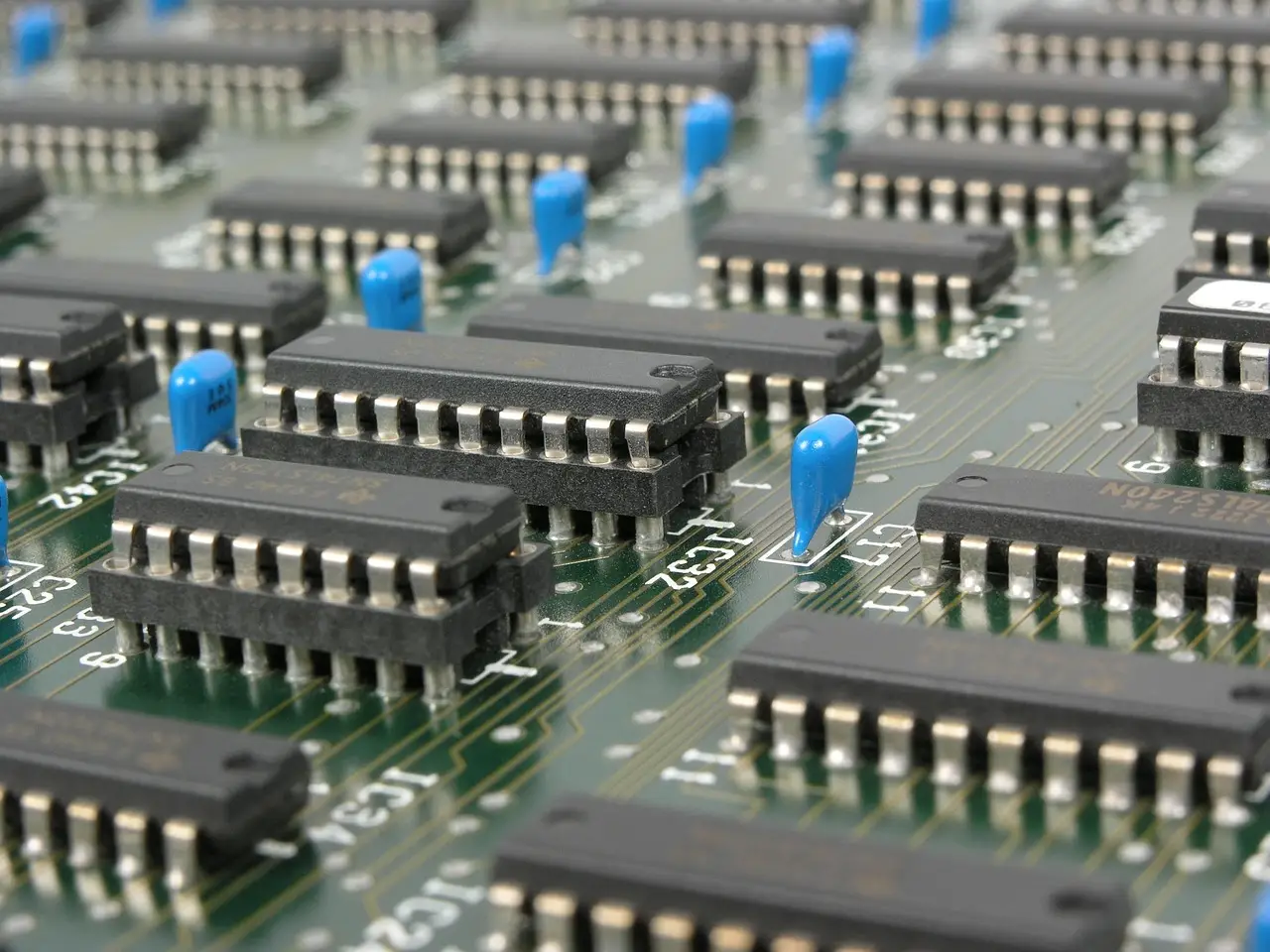
Muse Ember, Meta’s new lightweight agent model, costs 10 cents per million input tokens. Meta Superintelligence Lab released it Monday and describes it as the lab’s lightest and most cost-efficient model to date. The headline price is specific. Most of the evidence behind it is not.
What work is Ember designed to execute?
Meta said Ember was “designed for complex reasoning execution and the work agents repeat all day: tool calls, coding subtasks, routing, extraction, and long document parsing.” The list places the model in repetitive workflow execution rather than top-level planning.
For sales and support operations, the practical boundary is simple: Ember would handle volume after rules exist, while the announcement offers no win-rate, cycle-time, seller-productivity, or team-size result.
How strong is the price and benchmark claim?
Meta built its cost-per-task pitch around Artificial Analysis’s composite benchmark score. It says Ember is both cheaper and smarter than Anthropic’s Haiku and OpenAI’s Luna, and cost-competitive with open-source DeepSeek V4.1 Flash and GLM 5.3 Flash.
The price claim has one hard number: 10 cents per million input tokens. The intelligence claim has no score in the announcement. Meta describes Haiku and Luna as frontier competitors but provides neither the composite result, benchmark mix, sample size, nor output-token rate, so readers cannot independently judge the ranking. No latency figure is given either.
An input-token price alone does not establish the cost of a completed task. Meta’s comparison establishes an entry rate, not the full economics of running an agent.
Where does Ember fit beside Wonder?
Meta pairs Ember with a larger model inside an agentic harness, meaning a coordinated setup in which models divide a task. In its customer-support example, a heavier model establishes rules for a particular issue; Ember applies those rules across tens of thousands of cases.
Meta frames the arrangement around low cost and accuracy at scale, then compresses the pitch into eight words: “Muse Wonder plans, Muse Ember handles the volume.”
This remains a proposed workflow, not a measured deployment. The announcement reports no cost per resolved case, error rate, latency, implementation time, or number of support workers handling that volume.
For sales teams, Ember fits high-volume routing and case execution after rules are set, not opportunity creation or complex deal design. The source offers no seller-team threshold; its only scale marker is tens of thousands of support cases.
Can one model handle mixed media?
Meta trained Ember for text, images, and audio, with emphasis on volume-heavy use cases. The company says agents can read screenshots, charts, and scanned documents, and work from voice memos, meeting recordings, and video without a separate model.
That breadth could remove model switching during repetitive processing, which matters when queues run in the tens of thousands. Meta gives no modality-specific accuracy figures, task comparisons, or deployment sample showing where the smaller model fails. The claim is functional, not yet measured.
What has Meta released under Muse?
Ember is the fourth model released under the Muse brand. The sequence runs from mid-weight Spark in April, through Spark’s open-source twin Glimmer in August, to frontier Wonder in October.
Meta also released the Muse Agent, its flagship consumer AI product, in September, which the company described as an unexpected success. Spaces and video chat began rolling out earlier this month. That consumer result has no supporting metric. The announcement gives no user count, revenue, retention rate, or adoption figure, so success remains qualitative.
Meta now has a clear division: Wonder plans, Ember handles repeated work, and mixed media stays within one model. The input-token price is specific; the promised savings are not. If Meta publishes task-level costs, accuracy by workload, and deployment results across tens of thousands of cases, buyers can test whether its planned-versus-volume split holds in practice.
via techcrunch.com (Source)
More from Nathan Brooks
Show full bio
News editor covering companies, deals and strategy in Sales technique and methodology, sales enablement at Quota Brief.
120 articles