Program report · filed November 19, 2026
AI in SalesMeasured report
Linq raises $90 million to build infrastructure for AI agents
Linq raised $90 million to expand AI-agent messaging, computer-use and voice tools after processing more than 1 billion messages for clients including DoorDash, Town and Tomo.
By Rebecca Stone4 min read731 words
Program notes
- Linq raised $90 million in a round led by Andreessen Horowitz.
- Linq has processed more than 1 billion messages for clients including Town, Tomo and DoorDash.
- Cloudflare reports that more than half of internet traffic is non-human and agent requests rose by more than 1,700% over the past year.
- Linq announced two new product areas: Agentic Computer Use and HD Calling for Agents.
- Ben Horowitz joined Linq's board, while TQ Ventures, Mucker Capital, Abstract, Anthos and Left Lane Capital participated in the round.
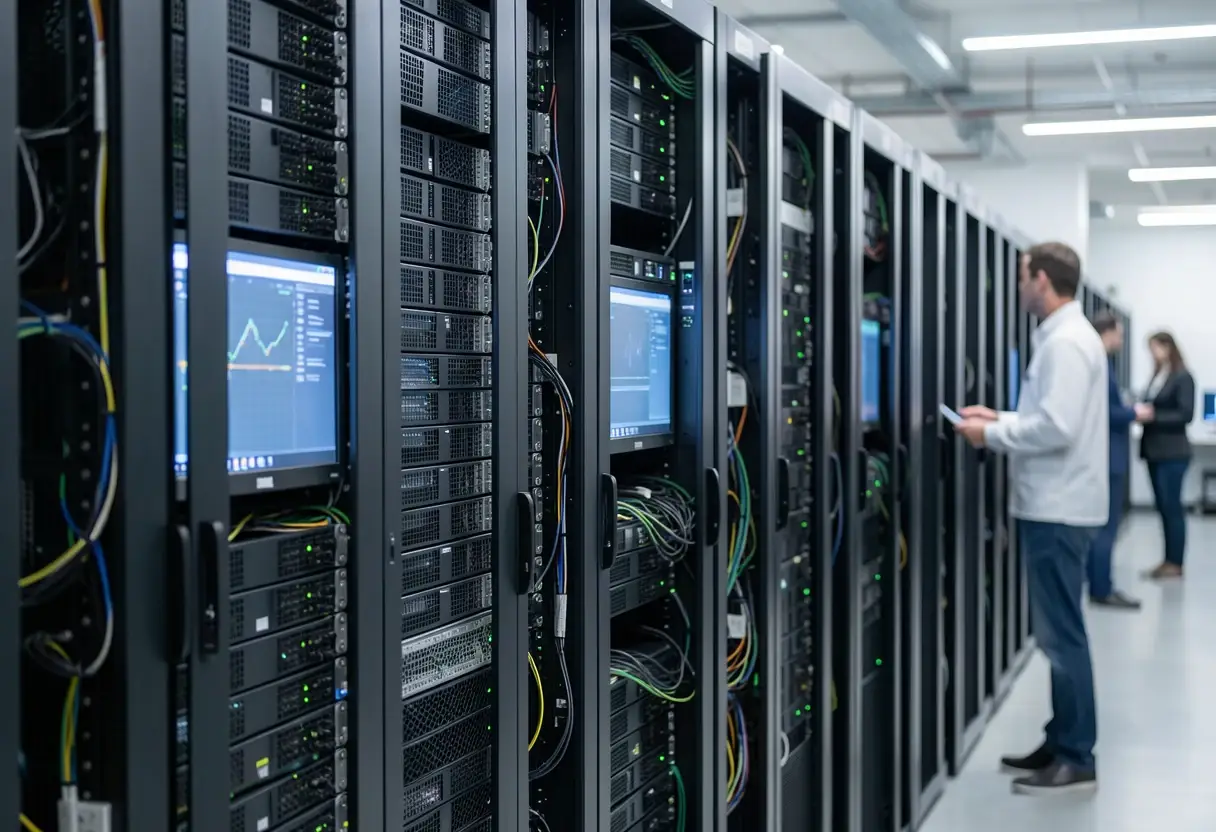
Linq raised $90 million in new funding led by Andreessen Horowitz, as the infrastructure company plans to expand beyond messaging into tools that let AI agents operate software and handle phone calls. The announcement frames AI agents as a new interface layer after websites and mobile apps.
Andreessen Horowitz co-founder and general partner Ben Horowitz will join Linq's board. TQ Ventures, Mucker Capital and Abstract continued their participation, while Anthos and Left Lane Capital added new investments.
Ben Horowitz said: “Agents will communicate and get work done just like people do. Linq gives agents the infrastructure to do both at scale.”
What does Linq already run?
Linq has processed more than 1 billion messages to date for clients including Town, Tomo and DoorDash. The company describes itself as connective tissue between enterprises and agents operating where customers already are.
That is an operating metric, not evidence of product-market fit by itself. Linq discloses no measurement period, revenue, retention rate, message concentration or number of enterprise customers.
At DoorDash, Linq's messaging infrastructure powers a unified, agentic ordering flow. A customer can choose food, build a cart and complete checkout in one conversational thread, covering the consideration and purchase stages of a commerce journey.
Aryan Shah, DoorDash's head of AI research, said the best AI experiences fit naturally into people's lives. The announcement gives no DoorDash user count, completion rate or share of Linq's billion messages, so the example proves a workflow rather than its scale.
Linq is also an Apple Messaging Service Provider. The credential supports the company's plan for wider enterprise deployment, but the source discloses no implementation count or deployment timetable.
Is agent traffic already material?
Cloudflare reported that more than half of all internet traffic is no longer human. It also reported that AI-agent requests across its network increased by more than 1,700% over the past year.
The underlying item gives no report date, traffic-classification method, sample window for the traffic share or baseline for the request comparison. It also does not define an agent request. The numbers show the scale Cloudflare reports, not independently reproducible evidence that agents reliably complete commercial tasks.
The source places this traffic shift in a move from passive chatbots toward agents that can book, buy and interact with software for people. That transition increases the need for transaction infrastructure, but neither Cloudflare figure measures conversion, task completion or Linq's revenue.
What does the $90 million buy?
Linq says it will use the funding to expand beyond standard messaging APIs. Two announced additions define that expansion:
- Agentic Computer Use: Giving agents access to physical computing infrastructure so they can interact with traditional, human-designed software and complete complex workflows.
- HD Calling for Agents: Adding voice capabilities to the infrastructure stack and allowing digital agents to pick up the phone.
Neither addition has a disclosed release date, customer, price or performance benchmark. Linq also did not say how much of the $90 million will fund product development rather than hiring, sales or infrastructure operations.
CEO Elliott Potter says the company aims to remove backend work so developers can concentrate on customer-facing agent experiences. Potter said: “Clicking through five screens to make a payment will become two words to an agent: ‘pay rent,’” “We help developers build customer-facing agents that use human tools to do human work.”
That example states an ambition rather than a disclosed transaction result. The announcement names no computer-use or voice customer, completed payment volume, failure rate, latency measure or pricing structure.
Where should revenue teams place their expectations?
For sales teams, the product map separates current infrastructure from planned capability. Messaging has a documented route into discovery, consideration and checkout, as shown by DoorDash. Agentic Computer Use targets the execution stage after a customer states an intent, while HD Calling targets work that requires telephone interaction.
These mappings apply to customer-facing enterprise teams, but Linq provides no adoption data by team size, company size or seat count. Buyers should test messaging, computer use and voice separately rather than assume that one billion messages proves agents can complete multi-screen software tasks or conduct successful calls.
Funding gives Linq resources to pursue that expansion. The next evidence to watch is concrete: release dates, named customers, task-completion rates and the period covered by its message total.
via citybiz.co (Source)
More from Rebecca Stone
Show full bio
Market editor covering people, launches and day-to-day practice in Sales technique and methodology, sales enablement at Quota Brief.
139 articles
Also rated
- Zeliq Raises €7M to Put AI Agents Inside the Sales Workspace
- Dialpad Buys Ada for $430M, Resetting Conversational AI Valuations
- 89% First-Contact Resolution: ServiceNow Makes CRM an Enterprise Play
- CRM and CDP Vendors Put Customer Data Inside Enterprise AI
- Forrester's New CPaaS Landscape Arrives Early 2027 as Market Shifts