Program report QB-7786 · filed September 26, 2026
AI in SalesMeasured report
Home Depot Consolidates AI Tools for Pro Customers Into One Workspace
Home Depot has consolidated its AI tools for Pro customers into a single workspace, unifying the digital buying workflow for contractors.
By Nathan Brooks2 min read419 words
Program notes
- Home Depot has moved its AI tools for Pro customers into one consolidated workspace.
- The change targets Home Depot's professional segment: contractors, builders, and repair businesses.
- The available reporting does not specify launch date, tool list, or adoption metrics.
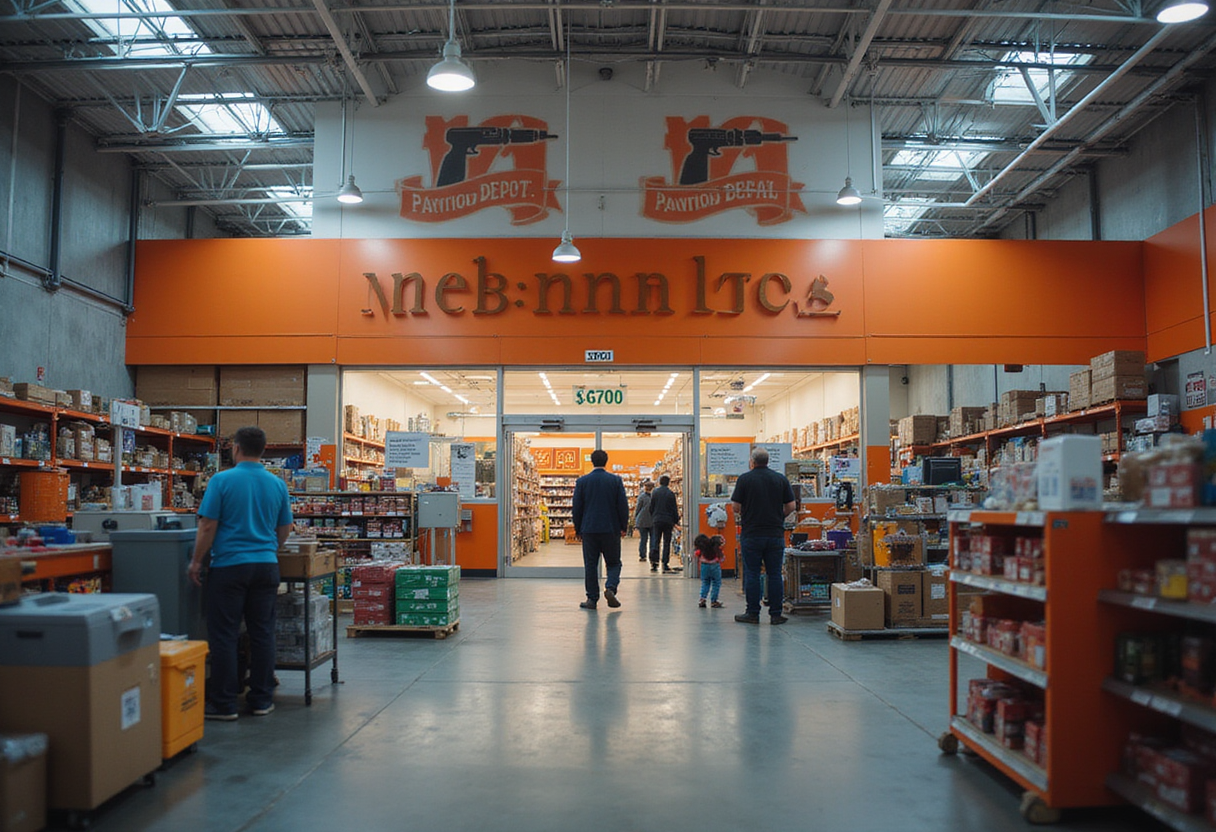
Home Depot has moved its AI tools for Pro customers into one workspace, consolidating capabilities that previously lived in separate parts of the retailer's digital experience for contractors and tradespeople.
The change, reported by Digital Commerce 360, targets Home Depot's professional customer segment — the builders, contractors, and repair businesses that drive a substantial share of the company's sales volume. For that segment, speed on routine tasks such as product lookup, job-lister assembly, and order tracking directly affects billable hours on job sites.
A single workspace matters for a specific reason: tool fragmentation is a measurable tax on professional buyers. When a contractor has to move between a product search tool, an order system, and a support channel to complete one purchase cycle, each switch adds friction that compounds across dozens of orders per week. Consolidation puts those steps behind one interface, which is the workflow change Home Depot is betting on.
The move also signals how Home Depot is positioning AI relative to its two customer bases. The company has invested in AI-driven shopping assistance for consumers, but the Pro segment operates under different constraints — larger basket sizes, recurring job-based purchasing, and time pressure that consumer tools don't address. A dedicated, unified workspace is a structural acknowledgment that Pro customers need a different digital workflow, not a repackaged consumer experience.
For vendors and sales teams selling into construction and trades, the development is worth watching on two fronts. First, it raises the bar for what a B2B commerce experience looks like in the home improvement vertical: if Pro customers grow accustomed to one-workspace AI support at Home Depot, they will expect comparable consolidation from suppliers. Second, it illustrates a broader pattern in AI deployment — the shift from scattered proof-of-concept tools to integrated workflows, which is where most enterprises are now concentrating their investment.
Digital Commerce 360's report does not specify which individual AI tools the workspace combines, the launch date, or adoption metrics, so the impact on Pro purchase frequency and order size remains unmeasured in the available reporting. What is established is the structural change itself: one workspace, replacing a distributed toolset, for a customer segment Home Depot has identified as strategically central.
The open question is whether consolidation translates into behavioral change — shorter reorder cycles, higher Pro retention, or larger average orders. Home Depot's next earnings commentary and any Pro segment metrics the company discloses will indicate whether the unified workspace is moving those numbers.
via Google News: B2B sales (Source)
More from Nathan Brooks
Show full bio
News editor covering consumer brands and retail at Quota Brief.
26 articles
Also rated
- Rockwell Automation Reshuffles Executive Leadership Across Sales and Operations
- Software Firms Deploy AI Sales Agents 4x Faster Than Other Sectors
- Shopify Posts 30% Revenue Growth in 2025
- Software Firms Deploy AI Sales Agents 4x Faster Than Any Other Sector
- Software Firms Deploy AI Sales Agents 4x Faster Than Other Industries